
Turbidity – the cloudiness of water – is perhaps one of the most immediately noticeable water quality parameters for consumers. While perfectly clear drinking water typically registers less than 1 NTU (Nephelometric Turbidity Unit), a bustling river might reach closer to 70 NTU. At Akubic Water, we understand the critical importance of clear water for consumer satisfaction and assessing network condition.
What is Turbidity and How Do You Measure It?
At its core, turbidity is a measure of water’s cloudiness, directly impacting its aesthetic appeal. A higher turbidity reading indicates cloudier water. This makes it a crucial indicator for consumers or anyone interacting with water.
Measuring turbidity is typically achieved by assessing the absorption and scattering of light. The international standard ISO 7027 provides precise guidance on this measurement. It mandates the use of near-infrared light beams with a 90-degree detection angle. This is precisely how Akubic’s advanced Intellisonde DIs measure turbidity, ensuring accurate and reliable data.
Measuring turbidity is typically achieved by assessing the absorption and scattering of light. The international standard ISO 7027 provides precise guidance on this measurement. It mandates the use of near-infrared light beams with a 90-degree detection angle. This is precisely how Akubic’s advanced Intellisonde DIs measure turbidity, ensuring accurate and reliable data.
What Causes Turbidity?
Turbidity is generally caused by suspended particles within the water. In drinking water, these can include undissolved minerals (such as calcium carbonate in hard water areas), microscopic biofilm, or particulates from degrading pipes.
However, for consumers, the most frequent cause of “cloudy” water complaints is often quite benign: air bubbles. As water warms, its capacity to hold dissolved oxygen decreases. This leads to a process called degassing, where microscopic air bubbles are released from the solution, creating a milky or cloudy appearance. A simple test to confirm this is to leave a sample of the water in an open glass for about 20 minutes; if it’s air, the cloudiness will gradually dissipate.
For water companies, discerning whether a complaint stems from a genuine turbidity incident or merely air bubbles is vital. This can be achieved by simultaneously measuring multiple parameters across the network. For instance, by comparing turbidity and temperature readings at the treatment works with those taken in the network just before a customer’s tap, operators can readily identify if the water has warmed up (suggesting degassing) or if a network-level turbidity event has occurred. This crucial insight allows for more effective handling of customer complaints, safeguarding reputation, and significantly reducing the costs associated with unnecessary sampling. (For more reasons to monitor temperature, explore our dedicated blog post.)
However, for consumers, the most frequent cause of “cloudy” water complaints is often quite benign: air bubbles. As water warms, its capacity to hold dissolved oxygen decreases. This leads to a process called degassing, where microscopic air bubbles are released from the solution, creating a milky or cloudy appearance. A simple test to confirm this is to leave a sample of the water in an open glass for about 20 minutes; if it’s air, the cloudiness will gradually dissipate.
For water companies, discerning whether a complaint stems from a genuine turbidity incident or merely air bubbles is vital. This can be achieved by simultaneously measuring multiple parameters across the network. For instance, by comparing turbidity and temperature readings at the treatment works with those taken in the network just before a customer’s tap, operators can readily identify if the water has warmed up (suggesting degassing) or if a network-level turbidity event has occurred. This crucial insight allows for more effective handling of customer complaints, safeguarding reputation, and significantly reducing the costs associated with unnecessary sampling. (For more reasons to monitor temperature, explore our dedicated blog post.)
Why Measure Turbidity in Drinking Water?
Beyond aesthetics, measuring turbidity in drinking water holds significant importance:
- Consumer Satisfaction and Trust: Cloudy water is highly off-putting to consumers, who may be hesitant to use it for washing, let alone drinking. As visible turbidity can be detected by users at levels greater than 4 NTU, water companies must maintain exceptionally high standards to minimise complaints and uphold public trust.
- Identifying Discolouration Events: Discolouration events, often colloquially termed “discos,” greater than 4 NTU are commonly observed following network activity, such as increased flows due to bursts or changes in valve/pump operations. When water companies reconfigure networks, the associated higher flow rates can dislodge material (often biofilm) from pipe walls, leading to cloudiness and a high risk of customer complaints.
- Proactive Pipe Conditioning and Reduced Risk: Thankfully, Akubic’s innovative products empower water companies to proactively condition pipes and significantly reduce the risk of discolouration events. Our Intellisonde DIs can accurately detect turbidity changes down to an impressive 0.1 NTU and are sensitive to 0.001 NTU. Crucially, they can be installed directly in the pipe while simultaneously measuring flow. This powerful combination enables our Insight platform to analyse the data and identify the critical shear point – the specific flow rate at which material will shed from the pipe walls.
By knowing this critical shear point and having real-time data, water companies can carefully ease their flow rates towards this threshold without triggering a widespread discolouration incident. This allows pipes to be gradually brought up to higher flow rates while minimising the impact on consumers. - Condition-Based Flushing and Operational Efficiency: Another significant benefit of this technology is the ability to transition from scheduled pipe flushing or reactive flushing (in response to numerous complaints, which may not actually be the source of the problem – see below) to condition-based flushing. By understanding the pipes’ resilience to discolouration incidents, flushing can be conducted only when truly necessary. This saves considerable maintenance time and consequently reduces operational costs.
Tracking the Root-Cause of Discolouration and How Akubic Provides a Solution
The combination of Akubic’s Intellisonde DI and the Insight platform offers unparalleled capabilities in tracking the root cause of discolouration events geospatially throughout the network. This intelligence is invaluable for efficient problem-solving.
For example, one of our European customers, equipped with Intellisonde DIs, was able to pinpoint that a turbidity event originated at their water tower at the top of the network, rather than in the village where they received complaints. This precise knowledge saved them considerable time and resources by allowing them to address the true source of the problem, instead of simply flushing pipes where the issue was initially detected by consumers.
Even in the absence of significant events, the proactive turbidity monitoring of the Intellisonde DI can be used to identify the root causes of discolouration by distinguishing whether material is shearing locally from pipe walls or propagating from elsewhere in the network. In one instance, a UK customer utilised this intelligence to implement dynamic network management and successfully flush out a trunk main that was the actual source of complaints, rather than the original plan of focusing on a smaller District Metered Area (DMA). Read the full case study here.
At Akubic Water, we are committed to providing water companies with the tools and insights necessary to deliver consistently clear, high-quality water to their consumers, while simultaneously enhancing operational efficiency and reducing costs.
Contact our team to find out more
For example, one of our European customers, equipped with Intellisonde DIs, was able to pinpoint that a turbidity event originated at their water tower at the top of the network, rather than in the village where they received complaints. This precise knowledge saved them considerable time and resources by allowing them to address the true source of the problem, instead of simply flushing pipes where the issue was initially detected by consumers.
Even in the absence of significant events, the proactive turbidity monitoring of the Intellisonde DI can be used to identify the root causes of discolouration by distinguishing whether material is shearing locally from pipe walls or propagating from elsewhere in the network. In one instance, a UK customer utilised this intelligence to implement dynamic network management and successfully flush out a trunk main that was the actual source of complaints, rather than the original plan of focusing on a smaller District Metered Area (DMA). Read the full case study here.
At Akubic Water, we are committed to providing water companies with the tools and insights necessary to deliver consistently clear, high-quality water to their consumers, while simultaneously enhancing operational efficiency and reducing costs.
Contact our team to find out more
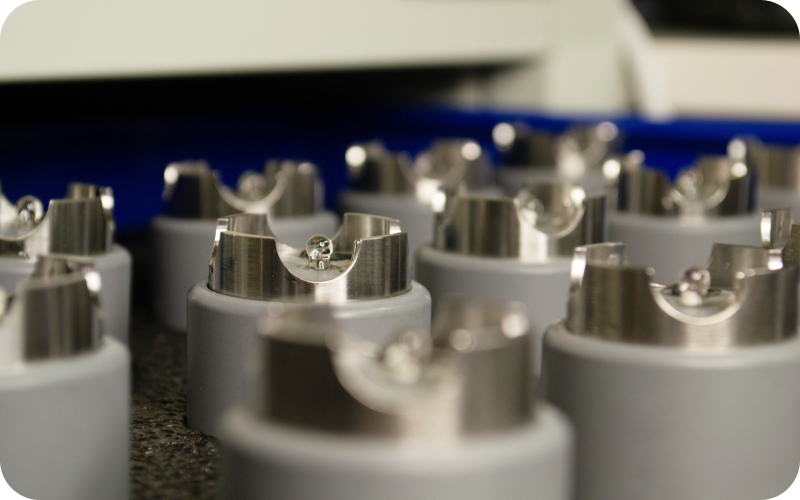
Our Sensors
Take a look at our state of the art Chlorine and Turbidity sensors.
One device. One installation. One maintenance point.

Insight App
The Akubic Insight water network management platform allows users to monitor water quality hotspots, event detection, leakage rates and much more.

Our experience with water
We are committed to supporting our customers deliver safe high quality water and making it available everywhere.