
What is Chlorine?
Chlorine is one of the most widely used disinfectants due to its effectiveness in neutralizing pathogens, including harmful bacteria and viruses, as well as its affordability 1–3.
Within the water industry, chlorination (the use of chlorine to disinfect water) has been applied regularly since 1905 2 to disinfect drinking water supply. Since then, chlorination has been used in wastewater treatment 4, pool disinfection 5, and even aquaculture 3,6,7.
Within the water industry, chlorination (the use of chlorine to disinfect water) has been applied regularly since 1905 2 to disinfect drinking water supply. Since then, chlorination has been used in wastewater treatment 4, pool disinfection 5, and even aquaculture 3,6,7.
The different forms of chlorine
Free Chlorine and Chlorine Dioxide are the two common forms of chlorine used for disinfection of water. Whilst they are both powerful disinfectants, they differ in their chemical properties, mechanisms of action, and specific applications.
Free Chlorine:
- Refers to all the chlorine present in water, either as chlorine gas (Cl₂), hypochlorous acid (HOCl) or hypochlorite ions (OCl⁻).
- It is effective against bacteria and viruses but can be less effective against certain protozoa such as Cryptosporidium 8.
- Free chlorine persists in water at residual concentrations, providing ongoing disinfection throughout the water network.
- However, free chlorine can react with natural organic matter, producing harmful byproducts such as trihalomethanes (THMs) and haloacetic acids (HAAs) 9.
Chlorine Dioxide
- Chlorine dioxide (ClO₂) is usually utilised as a gas or tablets that dissolve in water without forming acids, making it a relatively neutral compound.
- It is effective against bacteria, viruses and some protozoans such as Cryptosporidium 10.
- It does not form THMs or HAAs as byproducts like free chlorine does 9, but can form harmful chlorites 11,12.
Why should you measure chlorine in drinking water?
Monitoring chlorine in drinking water is critical for ensuring both regulatory compliance and a safe water supply. By optimizing chlorine control, the satisfaction of the end consumers and the operational efficiency of networks can be improved. Monitoring in real-time ensures the problems associated with under- or over-chlorination can be dealt with quickly and effectively.
- Disinfection: Chlorine is used to disinfect drinking water and to destroy substances which may affect its taste or odour 2. Proper disinfection is critical to keeping networks supplied with water that is safe to drink. If the chlorine level is insufficient for proper disinfection, the water may become unsafe.
- Regulatory compliance: Chlorinated water is only safe for human consumption at concentrations of 5mg/l and less, as established by the World Health Organization. In the UK, the current standard for residual total chlorine is 2mg/l 13. Meanwhile, at the point of delivery, minimum free chlorine concentration should be 0.2mg/l 14. The water companies are responsible for ensuring the chlorine levels stay between these minimum and maximum levels through the entire network, no matter how far they are from the water treatment works.
- Customer satisfaction: Chlorine levels can affect the taste and smell of water 15. If chlorine levels are too high or too low, drinking water quality can be affected and the water can become unpleasant to drink. Monitoring chlorine levels and keeping them within range is therefore important for reducing customer complaints.
Where else should you measure chlorine?
There are many applications where measuring the chlorine content of water can be helpful. While disinfection, safety, regulatory compliance, and disease prevention are relevant across all the applications listed below, each also has specific considerations.
Public pools and spas: Proper chlorination prevents health risks such as eye irritation, respiratory problems, and infectious diseases caused by waterborne pathogens. The Pool Water Treatment Advisory Group (PWTAG) provides strict guidelines for pool water management in the UK, and emphasises the importance of continuous monitoring systems to ensure water quality and safety.
Aquaculture: Appropriate chlorination is important for maintaining the welfare of organisms and for controlling the growth of biofilm and algae on equipment. Periodic measurement may be sufficient for some aquaculture applications.
Wastewater Treatment: Chlorine levels must be carefully controlled to minimize the ecological and environmental impact of wastewater discharge and reduce the formation of harmful byproducts.
Aquaculture: Appropriate chlorination is important for maintaining the welfare of organisms and for controlling the growth of biofilm and algae on equipment. Periodic measurement may be sufficient for some aquaculture applications.
Wastewater Treatment: Chlorine levels must be carefully controlled to minimize the ecological and environmental impact of wastewater discharge and reduce the formation of harmful byproducts.
How is chlorine measured?
Effects of pH on free and total chlorine
There are a number of unique methods for detecting chlorine concentrations, though most rely on detecting free chlorine as Cl-. Unfortunately, the pH of the water has a huge effect on the form of the total chlorine: converting from Cl2 and Cl- at very low pH, to HOCl at a neutral pH, to ClO- at a high pH. This causes issues with chlorine sensing, as not all forms are equally detectable with each method. Therefore, all chlorine measurement methods must have a way of controlling the pH, or measuring and then compensating against the change in chlorine form seen due to pH.
Colourimetry
Most chlorine test kits and handheld meters use the colourimetric detection method, which requires taking a sample, adding a series of reagents and observing or measuring a colour change.
The reagents include a pH buffer and a colour changing compound. A pH buffer is a chemical mixture that reacts to stabilise the pH of a solution. Once stabilised, the next compound is added to produce a colour change; the strength of this colour change depends on the amount of chlorine in the solution that reacts with the compound. The colour of the mixture is then either manually compared to reference colour panels or quantified with a colourimeter. The colourimeter consists of a light emitter and receiver, and measures the amount of light that is able to travel through a fixed distance of this solution. More chlorine means a stronger colour change, and therefore more light is absorbed. However, this also relies on the sample being in a perfectly clean container, as well as there being no dirt in the sample liquid or inside the colourimeter. A scratch on the sample container, a single fibre from a paper towel, or some bubbles in the sample can all cause wildly inaccurate readings.
Although a pH buffer is added to ensure that the solution being tested has a constant pH, the buffer solution may not be sufficient if the sample has an initial pH that is particularly high or low. This is why these measurement kits usually have a pH range specified, meaning they are not suitable for all samples.
Electrochemistry – Ion-Selective Membranes
Most electrochemical sensors, whether amperometric or potentiometric, rely on an ion-selective membrane which covers the active sensing material, allowing only chlorine to pass across. Theoretically, this allows a controlled environment where the pH and electrolyte concentration stay constant regardless of the outside conditions, allowing accurate measurements without needing to compensate the data, as well as protecting the sensor from dirt or buildup. Unfortunately, some membrane sensors struggle with drift issues as the membrane can easily clog with dirt or just deteriorate over time, leading to a loss of sensitivity and inaccurate readings.
Our approach
Chlorine measurement on the Intellisonde is by a unique method which avoids the inherent disadvantages of reagent and membrane sensing methods. We have developed an amperometric sensor with no membrane, instead controlling the detection voltages of the sensor to convert all chlorine into its detectable form, then selectively measure this concentration. Our sensor is also self-cleaning and allows continuous sensing without maintenance for an expected lifespan of a year.
Our Intellisonde DI sensor pack also includes pH and ORP sensors, offering multiple indicators of the chlorine level. Knowing the pH is vital to ensuring your chlorination is effective as you can check that the chlorine is in its active form. With each of these sensors working together, you can be confident of the chlorine levels in your water.
There are a number of unique methods for detecting chlorine concentrations, though most rely on detecting free chlorine as Cl-. Unfortunately, the pH of the water has a huge effect on the form of the total chlorine: converting from Cl2 and Cl- at very low pH, to HOCl at a neutral pH, to ClO- at a high pH. This causes issues with chlorine sensing, as not all forms are equally detectable with each method. Therefore, all chlorine measurement methods must have a way of controlling the pH, or measuring and then compensating against the change in chlorine form seen due to pH.
Colourimetry
Most chlorine test kits and handheld meters use the colourimetric detection method, which requires taking a sample, adding a series of reagents and observing or measuring a colour change.
The reagents include a pH buffer and a colour changing compound. A pH buffer is a chemical mixture that reacts to stabilise the pH of a solution. Once stabilised, the next compound is added to produce a colour change; the strength of this colour change depends on the amount of chlorine in the solution that reacts with the compound. The colour of the mixture is then either manually compared to reference colour panels or quantified with a colourimeter. The colourimeter consists of a light emitter and receiver, and measures the amount of light that is able to travel through a fixed distance of this solution. More chlorine means a stronger colour change, and therefore more light is absorbed. However, this also relies on the sample being in a perfectly clean container, as well as there being no dirt in the sample liquid or inside the colourimeter. A scratch on the sample container, a single fibre from a paper towel, or some bubbles in the sample can all cause wildly inaccurate readings.
Although a pH buffer is added to ensure that the solution being tested has a constant pH, the buffer solution may not be sufficient if the sample has an initial pH that is particularly high or low. This is why these measurement kits usually have a pH range specified, meaning they are not suitable for all samples.
Electrochemistry – Ion-Selective Membranes
Most electrochemical sensors, whether amperometric or potentiometric, rely on an ion-selective membrane which covers the active sensing material, allowing only chlorine to pass across. Theoretically, this allows a controlled environment where the pH and electrolyte concentration stay constant regardless of the outside conditions, allowing accurate measurements without needing to compensate the data, as well as protecting the sensor from dirt or buildup. Unfortunately, some membrane sensors struggle with drift issues as the membrane can easily clog with dirt or just deteriorate over time, leading to a loss of sensitivity and inaccurate readings.
Our approach
Chlorine measurement on the Intellisonde is by a unique method which avoids the inherent disadvantages of reagent and membrane sensing methods. We have developed an amperometric sensor with no membrane, instead controlling the detection voltages of the sensor to convert all chlorine into its detectable form, then selectively measure this concentration. Our sensor is also self-cleaning and allows continuous sensing without maintenance for an expected lifespan of a year.
Our Intellisonde DI sensor pack also includes pH and ORP sensors, offering multiple indicators of the chlorine level. Knowing the pH is vital to ensuring your chlorination is effective as you can check that the chlorine is in its active form. With each of these sensors working together, you can be confident of the chlorine levels in your water.
How can Akubic help?
Our Intellisondes can be adapted to your needs and measure a range of parameters, including chlorine, in a single device.
Over the years our customers have taken full advantage of the large range and high sensitivity of our chlorine detection. We have aided customers in tracing over-chlorination events through their networks, allowing them to flush sections of the network effectively and efficiently, minimising the wastage as much as possible. Our high resolution at low concentrations has enabled our customers to track the sources of stagnant water, identifying redundant regions of ring-mains and ensuring constant flow through the network.
We can make recommendations of the most efficient and appropriate locations for chlorine sensors around your network. If you are interested in measuring chlorine, our Intellisonde products can provide accurate and reliable measurements with flexible deployment options. Contact us to find out how we can help.
Over the years our customers have taken full advantage of the large range and high sensitivity of our chlorine detection. We have aided customers in tracing over-chlorination events through their networks, allowing them to flush sections of the network effectively and efficiently, minimising the wastage as much as possible. Our high resolution at low concentrations has enabled our customers to track the sources of stagnant water, identifying redundant regions of ring-mains and ensuring constant flow through the network.
We can make recommendations of the most efficient and appropriate locations for chlorine sensors around your network. If you are interested in measuring chlorine, our Intellisonde products can provide accurate and reliable measurements with flexible deployment options. Contact us to find out how we can help.
References
- What is Chlorination? Safe Drinking Water Foundation https://www.safewater.org/fact-sheets-1/2017/1/23/what-is-chlorination (2016).
- Humans, I. W. G. on the E. of C. R. to. Chlorinated drinking-water. in Chlorinated Drinking-Water; Chlorination by-Products; Some Other Halogenated Compounds; Cobalt and Cobalt Compounds (International Agency for Research on Cancer, 1991).
- Chlorine an effective disinfectant in aquaculture – Responsible Seafood Advocate. Global Seafood Alliance https://www.globalseafood.org/advocate/chlorine-an-effective-disinfectant-in-aquaculture/ (2008).
- Amin, M. M., Hashemi, H. & Bovini, A. M. A review on wastewater disinfection. Int. J. Environ. Health Eng. 2, 22 (2013).
- Simard, S., Tardif, R. & Rodriguez, M. J. Variability of chlorination by-product occurrence in water of indoor and outdoor swimming pools. Water Res. 47, 1763–1772 (2013).
- Sanawar, H., Xiong, Y., Alam, A., Croué, J.-P. & Hong, P.-Y. Chlorination or monochloramination: Balancing the regulated trihalomethane formation and microbial inactivation in marine aquaculture waters. Aquaculture 480, 94–102 (2017).
- Ben-Asher, R., Ravid, S., Ucko, M., Smirnov, M. & Lahav, O. Chlorine-based disinfection for controlling horizontal transmission of VNN in a seawater recirculating aquaculture system growing European seabass. Aquaculture 510, 329–336 (2019).
- van der Kooij, D., Hein, J., van Lieverloo, M., Schellart, J. & Hiemstra, P. Maintaining quality without a disinfectant residual. J. AWWA 91, 55–64 (1999).
- Gagnon, G. A. et al. Comparative Analysis of Chlorine Dioxide, Free Chlorine and Chloramines on Bacterial Water Quality in Model Distribution Systems. J. Environ. Eng. 130, 1269–1279 (2004).
- Gray, N. F. Chapter Thirty-Two – Chlorine Dioxide. in Microbiology of Waterborne Diseases (Second Edition) (eds. Percival, S. L., Yates, M. V., Williams, D. W., Chalmers, R. M. & Gray, N. F.) 591–598 (Academic Press, London, 2014). doi:10.1016/B978-0-12-415846-7.00032-9.
- Yang, X., Guo, W. & Lee, W. Formation of disinfection byproducts upon chlorine dioxide preoxidation followed by chlorination or chloramination of natural organic matter. Chemosphere 91, 1477–1485 (2013).
- Neguez, S. & Laky, D. Byproduct Formation of Chlorination and Chlorine Dioxide Oxidation in Drinking Water Treatment: Their Formation Mechanisms and Health Effects. Period. Polytech. Chem. Eng. 67, 367–385 (2023).
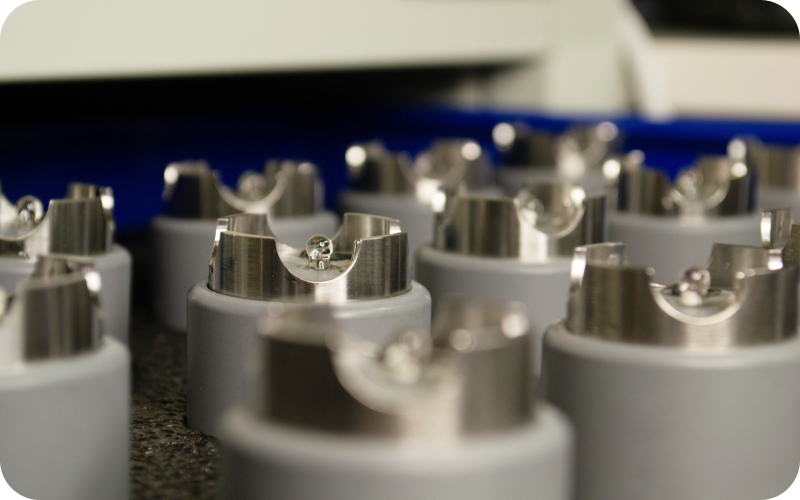
Our Sensors
Take a look at our state of the art Chlorine and Turbidity sensors.
One device. One installation. One maintenance point.
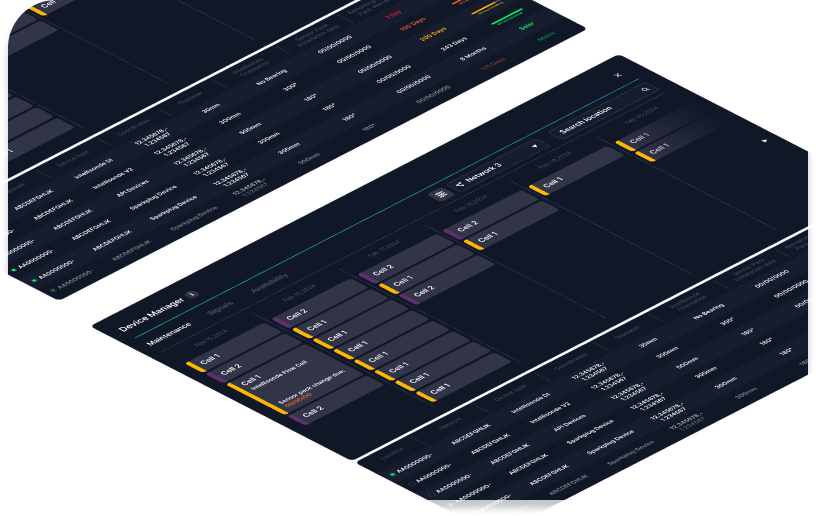
Insight App
The Akubic Insight water network management platform allows users to monitor water quality hotspots, event detection, leakage rates and much more.

Our experience with water
We are committed to supporting our customers deliver safe high quality water and making it available everywhere.