
What is ORP?
In a purely chemical sense, ORP, also known as Redox potential, is a measure of a chemical’s ability to lose electrons (known as oxidation) or gain electrons (known as reduction). ORP is measured in volts and for water quality represents the aggregate value for everything present in the water sample, therefore giving an indirect indication of the health of the water system.
In a stable water system, a consistent ORP reading can serve as a baseline to detect any future deviations. Any significant changes from this baseline may indicate contamination or a decline in water quality. Furthermore, ORP plays a crucial role in optimising water treatment, ensuring ideal conditions for efficient chemical reactions and maintaining overall system performance.
In a stable water system, a consistent ORP reading can serve as a baseline to detect any future deviations. Any significant changes from this baseline may indicate contamination or a decline in water quality. Furthermore, ORP plays a crucial role in optimising water treatment, ensuring ideal conditions for efficient chemical reactions and maintaining overall system performance.
Why do we measure ORP in drinking water and wastewater?
- Chlorination: In drinking water, the main cause of ORP changes is chlorination.1 Therefore, ORP can be used as a secondary verification parameter to see the levels of chlorine throughout your water network. This is a method used by some of our customers, who do not normally chlorinate their water networks, but do add chlorine as an additional safety measure after certain events or maintenance.
- Water Sources: As ORP gives an indication of the characteristics of the water, it can also be used to track water sources and the behavior of the distribution network. In a similar way to conductivity, although in chlorinated system, conductivity will generally be more stable.
- Treatment efficiency: Chemicals in wastewater such as nitrates, and the concentration of dissolved oxygen, have an impact on the ORP measurements. This can be used as another layer of verification that final effluent is safe for release.2,3
Why do we measure ORP in rivers and freshwater catchments?
- Pollution: ORP can tell us about the pollution levels of the river or freshwater catchment 4. Biological contamination such as slurry releases, as well as inorganic contamination such as metal salts, cause large changes in ORP readings which will warn you of a potential pollution event.
- Homeostasis: Maintaining a balanced ORP level is crucial for a stable aquatic ecosystem. A sudden change in ORP could indicate disruptions, such as algal blooms, chemical spills, agricultural run-off or increased organic decay, all of which could affect the river’s biodiversity.
- Heavy metals: The toxicity of certain pollutants can be influenced by ORP. For example, ORP has a major effect on the behaviour of heavy metals 5. Under reducing conditions (low ORP), some heavy metals can become more soluble, increasing their potential to contaminate water 5. On the contrary, high ORP conditions can oxidize and precipitate these metals, reducing their bioavailability and toxicity 6. For environmental monitoring, ORP can potentially indicate how vulnerable a system might be to pollution events such as industrial runoffs.
How can Akubic help?
Our Intellisondes can be adapted to your need and measure a range of parameters, including ORP, in a single device. Our customers use ORP readings for detection of contamination events, chlorination tracking, and systems verification. As with all parameters available on the Intellisonde, our Insight platform allows remote monitoring and analytics to help you get the most out of your data.
If you are interested in measuring ORP, our Intellisonde products can provide accurate and reliable measurements with flexible deployment options. Contact us to find out how we can help.
If you are interested in measuring ORP, our Intellisonde products can provide accurate and reliable measurements with flexible deployment options. Contact us to find out how we can help.
References
- Vasudevan, G. & Sudhir Kumar, B. Embedded based real time monitoring and detection of bacterial contamination in drinking water using ORP measurement. SSRG-IJECE 2, 1–4 (2015).
- Peddie, C. C., Mavinic, D. S. & Jenkins, C. J. Use of ORP for Monitoring and Control of Aerobic Sludge Digestion. Journal of Environmental Engineering 116, 461–471 (1990).
- Chang, Y.-J. et al. Microbial community analysis of anaerobic bio-corrosion in different ORP profiles. International Biodeterioration & Biodegradation 95, 93–101 (2014).
- Račys, V., Kliučininkas, L., Jankūnaitė, D. & Albrektienė, R. Application of ORP for the Evaluation of Water Contamination. Linnaeus Eco-Tech 1082–1089 (2010) doi:10.15626/Eco-Tech.2010.114.
- Mao, L. & Ye, H. Influence of Redox Potential on Heavy Metal Behavior in Soils: a Review. Research of Environmental Sciences 31, 1669–1676 (2018).
- Jain, D. K. & Tyagi, R. D. Factors affecting toxic metals removal from digested sewage sludge by enriched sulphur-oxidizing microorganisms. Bioresource Technology 45, 33–41 (1993).
Our Sensors
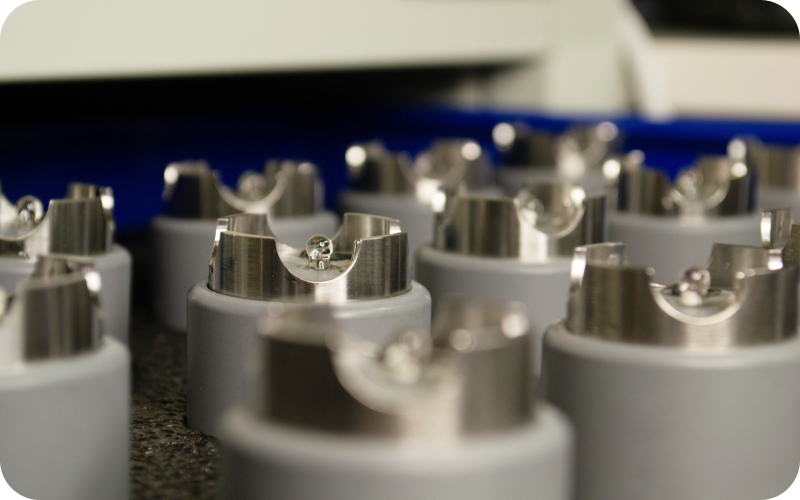
Take a look at our state of the art Chlorine and Turbidity sensors.
One device. One installation. One maintenance point.
Insight App
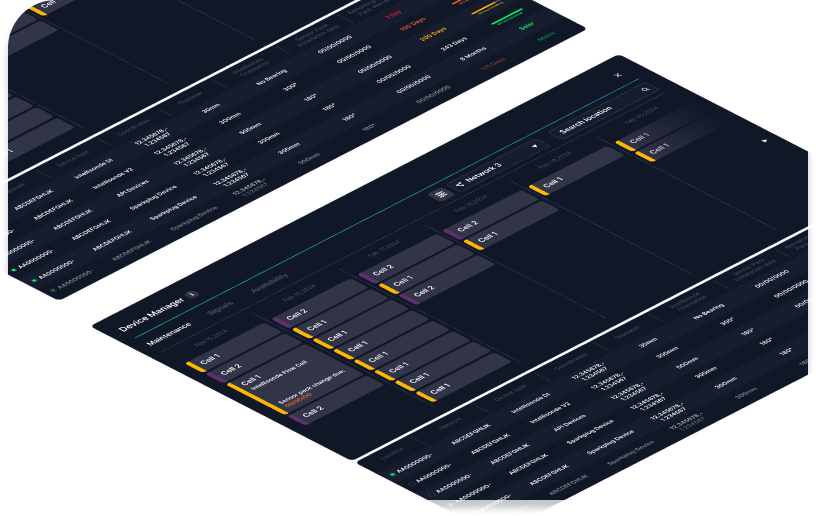
The Akubic Insight water network management platform allows users to monitor water quality hotspots, event detection, leakage rates and much more.

Our experience with water
We are committed to supporting our customers deliver safe high quality water and making it available everywhere.